
 |
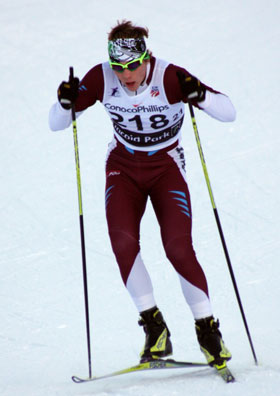
| FAST's Reese Hanneman - a man to watch |
When making this determination (to add XCold or not), snow and air temperature and humidity are indicators, but not what need to be focused on. If the snow is cold and slow, add XCold. If it is cold and fast, don't. Keep it simple. You can tell if the snow is slow without a thermometer.
Here is specifically how the waxes should be applied (mixing the HF Blue and XCold which is what I think was best for today). I am laying this out as this is such a common wax solution and application method and technique do make a difference.
- LF Blue/LF Moly mix 1:1. If it is warmer, go with straight LF Moly. This Blue/Moly mix is only for when it is cold. Scrape and brush.
- Drip HF Blue on the ski. Shake XCold on top. Melt them in together at about a 1:1 ratio. Some people like to heat in the Blue, shake the XCold over the Blue, and then heat them in together. I think when this is done, the XCold stays on top and never gets into the base. Scrape and brush out well (copper, then horsehair very well).
- Rub JetStream Blue on the base aggressively. Rotocork (a recent eBlast addressed rotocorking technique). Brush out with a Nylon Polishing Brush and polish with a Thermo Pad.
I do not recommend ironing JetStream (or any fluorocarbon) for cold powder conditions unless it is for a long event and then only maybe). Ironing a fluorocarbon when waxing for cold powder snow conditions yields a slower finish than rotocorking it. If all you have to work with is powder, then shake it on the ski and then do a quick iron job (maybe 8 seconds tip to tail with a hot iron), and then rotocork it. This will also yield good skis. (Then brush out with Nylon Polishing and polish with Thermo Pad).
More photos from the January 2, 2010 US Nationals Skate Sprint.