The big story is around the 2020 Noquemanon Ski Marathon results. Download this PDF of the 2020 Noquemanon Ski Marathon results and read the Mining Journal's article on the 2020 Noquemanon Ski Marathon to get this story.
The BIGGER story is around what skiers in the Noquemanon Ski Marathon 50K classic did to get kick in temperatures right around freezing. I always think of this as the "what wax do I try next" conditions because of the difficulty of finding the right kick wax. Rode has 6 hard waxes for the narrow range of temperatures around freezing. Swix has at least 15! And let's not forget all the klisters available for this temperature range. Zero Fahrenheit is an extremely difficult temperature for getting kick.
I asked a few high-placed Michigan Cup skiers in the Noquemanon Ski Marathon 50K classic to share their waxing secrets. In no particular order:
Ann Wagar (15th overall)
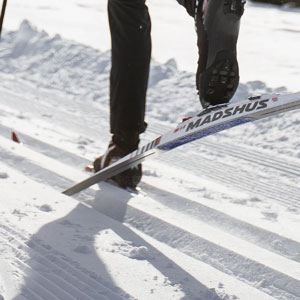
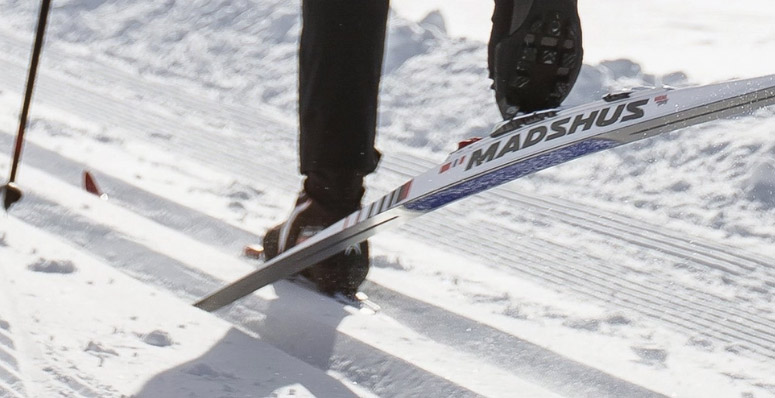
"I used my Madshus Redline IGS skins with the Move binding. I had some kick outside of the track on the first half and good kick in the tracks on the second half as it got warmer. I moved the binding forward for the first half of the race [for kick] and back to neutral for the second half of the race [for glide]. Mike [Bourassa] moved his bindings all the way back for the second half of the race to increase his glide on the long downhill sections."
Sam Holmes (3rd overall):
"I went with VR55N hardwax on my klister skis covered with VR45. It was about as warm as you could have gone without icing and it still picked up some snow outside of the track. The snow that my skis did pick up, I was able to kick off at the top of the climbs. Past about 30K there was no kick at all. After Forestville your pole plants would break through if you poled with any effort. The 2nd place finisher separated from Alex [Vanias, 4th] and I at that point because he thought ahead to use large baskets.
I had intended on using my zeros, but forgot I never transitioned the bindings to NNN on that pair of skis. It was a huge disappointment when I tried to put them on in Ishpeming and realized I didn't have the right boots with me. I was then scrambling to figure out what to race on until a few minutes before the start."
Ellen Wiitala (2nd overall):
"I was lucky enough to have zeros for race day. Glide was a combo of HF8 and HF10. Zeros felt a bit like doping on a day like that!"
So what did we learn?
- "No wax" skis were the call of the day, skins or zeros. (For those who don't know, zeros are classic skis with an area under the kick zone that is manually sanded to raise PTEX hairs. The PTEX hairs allow for kick. The hairs are sprayed or covered with a lubricant such as Toko Helix or Rex Hydrex 2 to prevent icing). Even Sam would have used zeros if he had remembered to bring the correct boots.
- No-wax was the answer, but clever waxing worked as well! Sam applied a soft kick wax first, let it cool outside, then applied a harder kick over the top. This way the softer wax provided a cushion that would allow snow crystals to adhere and the harder wax top stopped icing. Unfortunately, his wax wore off - maybe a different binder would have made a difference (I always liked green klister, ironed in really thin as a binder.)
- The position of the binding makes a difference! Ann and Mike moved their bindings to get more kick or more glide as conditions dictated.
- Pole baskets matter! In fact, see this old article I wrote "The Effect of Ski Pole Basket Size on Forward Momentum". The wrong basket can cause you to lose ground in a race.
The last lesson is to review every race. What worked, what didn't? Ask other skiers what they would have done differently. Cross country ski racing is such an amazing sport because there are so many variables, and understanding those variables can make you a better skier.